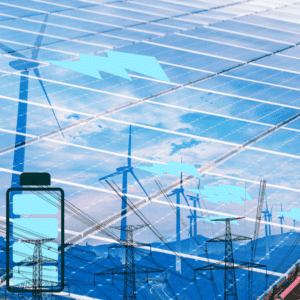
Renewable Energy is NOT Intermittent and Does NOT Need Baseload Power: Wind, Solar, Batteries, Grids
Wind and solar paired with batteries and grid solutions mean there is no longer a need for gas plants and new fossil fuel infrastructure and mean that base load power is an outdated concept. Find out more:
“Battery storage can now meet peak demand at a much lower cost than thermal power plants. In addition, renewable energy projects come online much faster—between six and eighteen months for solar—and carry less risk of cost overruns…. PROENERGY the company promoting the project, is headquartered in Missouri, and the gas burned in the proposed plant will come from the Marcellus and Utica shales in the United States.”
- New Research Challenges Need for Baseload Power Plants, German Academy of Science and Engineering (acatech) summary in The Energy Mix, 2024.
- Baseload myths and why we need to change how we look at our grid: It is a meaningless concept at the least and dangerous at its worst, Pembina Institute 2017.
- Did Renewable Energy like Wind and Solar Really Damage the Alberta Power Grid? The answer is no (podcast on the huge roles renewable energy like solar and wind, and battery storage, played in helping to solve a freezing temperature power crisis in Alberta).
- The Energy Mix coverage on battery storage in Canada and elsewhere.
- The Energy Mix coverage on renewable energy generally in Canada and elsewhere.
- Oil and gas-linked climate skeptics are trying to hold back renewable energy.
- Excess renewables generation did NOT cause Iberian blackout and Spain’s renewables revolution will keep energy bills low even as gas prices soar due to the Iran war.
- Batteries for the grid also work in cold climates.
- In the U.S. “wind companies rank among the biggest taxpayers in many rural communities, with their total tax bills at times outstripping that of large farms, power plants and other major businesses…. Farmers who sign wind leases can also continue farming most of their land while adding additional revenue.”
- Indeed supply chain disruptions cause by international factors beyond our control – and resulting price volatility – mean it is oil and gas that are intermittent and unreliable, not renewables.
- Politico reports “The U.K. is doubling down on clean energy, not despite the Iran crisis — but because of it.”). Proposed oil pipelines, gas and LNG projects in Canada are years away from being developed (and already have no business case) and current shocks in prices caused by the Iran war are actually likely to reduce global demand for oil and gas by convincing oil and gas consuming countries to shift to cheaper and more stable renewable energy even faster.
Not only can Canada go 100% renewable, it would create more jobs and be better for energy security than investing in oil and gas development and renewables generate vital revenue. We already have solutions (see sources below) for when the sun does not shine or the wind doesn’t blow such as interconnecting grids, diversified renewables, energy storage, and energy efficiency.
Oil and gas corporations, and their friends in the U.S. Administration, have been lying to the public about climate change, and have been trying to delay renewables like wind power by spreading misinformation about them, and now we’re paying the price. Air pollution from fossil fuels kills 5 million people each year globally, yet oil and gas-linked climate skeptics are trying to hold back renewable energy.
Severe storms like Hurricane Fiona, and wildfires like the Jasper wildfire and those in Newfoundland and Labrador have been made many times more likely and more severe because of climate change.
Related
On oil and gas demand economics and the reasons why NO new oil and gas projects will be needed:
- Oil Change International points out recent claims that oil and gas demand would continue to grow globally past the early 2030s are based on a single, faulty, scenario that the International Energy Agency (IEA) had previously abandoned and only re-published following pressure from the current U.S. Administration.
- A summary of sources on why Bay du Nord and offshore oil are particularly economically unviable given coming drops in demand.
- A summary of various sources with links to more information on oil and gas demand peaking in the 2030s, why AI data centres prefer renewable energy, and why renewables are taking off globally (focussed on LNG but with sources concerning oil demand as well).
- A November 2025 report by the UK-based Carbon Tracker shows a stark picture of the revenue losses provincial governments will face in the next decade as oil and gas demand dries up globally:
- “By 85% in Alberta, from $153 billion to $23 billion;
- By 72% in British Columbia, from $47 billion to $13 billion;
- By 78% in Saskatchewan, from $16 billion to $3.5 billion;
- By nearly 100% in Newfoundland and Labrador, from $4.4 billion to $300 million.” (4).
- Report by the ACCR assessed ten major oil and gas companies, including Equinor.
- Equinor’s stock downgraded due in part to continued consideration of Bay du Nord.
- “The International Institute for Sustainable Development (IISD) found that Newfoundland and Labrador subsidized fossil fuel companies to the tune of $82 million in 2020-2021 and even more the following year.”
- LNG is unlikely to replace coal overseas; analysts confirm that renewable energy – not LNG – is the biggest competitor to coal in both China and India.
- Further, “achieving the UK’s net zero target by 2050 will cost less than a single oil shock [costs] and bring health and economic benefits while insulating the country against future costs.”
- Ditch Hydrogen as ‘Poor Decarbonization Tool’, Citizens’ Committee Urges Edmonton [only green hydrogen is actually green (neither grey nor blue hydrogen are actually green and both have serious environmental impacts) and while green hydrogen can help with some processes a much more major role in decarbonization will be via electrification, batteries and renewable rather than hydrogen].
- “What did Canadians get for the $4.5 billion in public funding spent on small modular nuclear reactor (SMR) activities? Our new report assessing SMR development in Canada found the results underwhelming, to say the least…. each unit of electrical energy from ( small modular reactors / small scale nuclear ) would be far more expensive that a corresponding unit from solar and wind power plants, even when the cost of storage technologies and other means of accounting for renewable energy’s variability are included,” read more.
Other Renewable Energy Fact Sheets:
- Wind Energy Facts: Reliable, cheap, provides both jobs and revenue.
- Electric vehicle facts.
- Related: Listen to our Sovereignty Saturdays Podcast sub-series on the connections between climate action and sovereignty.
Canadians are strongly opposed to foreign aggression to secure access to natural resources.
- 70% say that it’s completely unacceptable for one country to use military force to take control of another nation’s resources
- 72% percent say it would be unacceptable for the United States to have arrested Venezuelan President Nicolás Maduro to access oil reserves
- 80% say it would be unacceptable for the United States to seize Greenland for its natural resources.